The ladder is always there

Curated by the S/TAC Collective

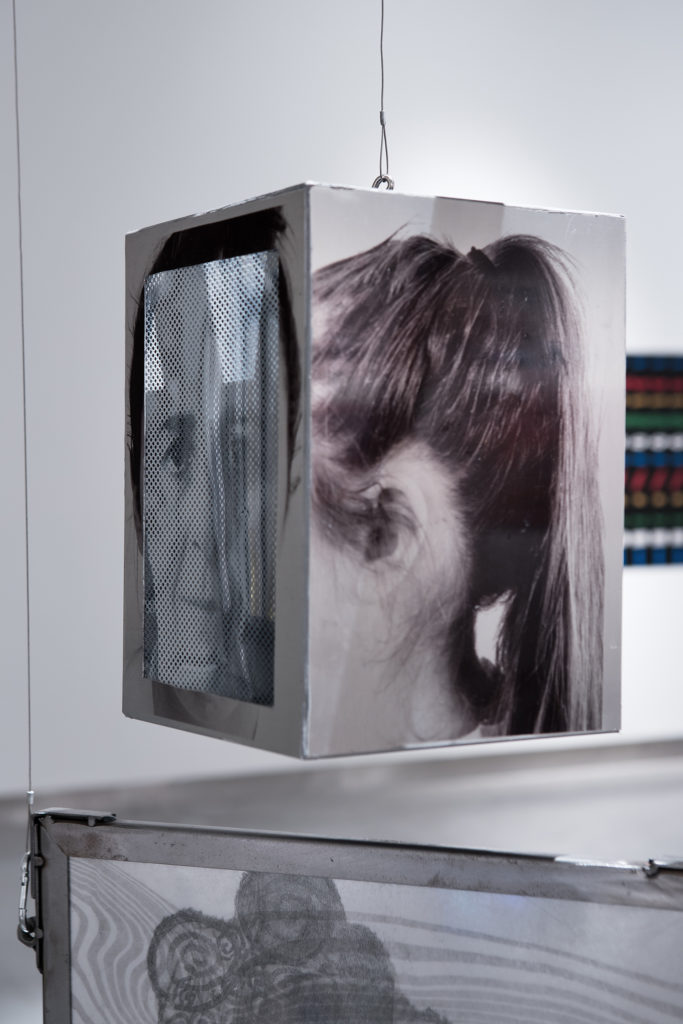
Shell/Ter Artist Collective (S/TAC): Diana Copperwhite, Allyson Keehan, Niamh McGuinne, Sharon Murphy, Geraldine O’Neill in association with ten emerging artists; Maya Brezing, Matthew Coll, Karen Ebbs, Spencer Glover, Ami Jackson, Mary Martin, Fiach McGuinne, Sorcha McNamara, Eileen Leonard Sealy and Catherine Ward.The exhibition’s title, the ladder is always there, is from the poem ‘Diving into the Wreck’ by the feminist American poet Adrienne Rich who conjures the image of a woman preparing for a deep-sea scuba dive to explore a shipwreck. The ladder can be understood as both an object and as a metaphor for support and movement, always there. 

The main focus of this exhibition is to highlight the role of an artist collective as a form of support for early career artists and to encourage collective action through art. It presents new works by recent graduates alongside more established artists in drawing, painting and its expanded forms – photography, print, film, installation – which take inspiration from or which reference painting, both materially and conceptually. 

“The word Shelter means to me what you care for and how you do that both physically and psychologically. The importance to me of the Shell/ter Artist Collective is that it is a dynamic space, one in which to experiment and find connections that you might not find on your own. My hope is that it continues to change and adapt … while remaining a form of shelter in itself.”

Shell/ter Artist, Niamh McGuinne

The Shell/Ter Artist Collective explores the concept of shelter from emotional, psychological, and philosophical perspectives and seeks to provide a dynamic space for artists whose work resonates with or delves into the theme of shelter. This is closely aligned with Draíocht’s commitment to support young, early career artists from Dublin 15, Fingal County and beyond through commissions, exhibitions, studio residencies, bespoke mentoring, and international exchange. 

Artist Collectives are not new. From ancient sculpture workshops, medieval painter guilds, Renaissance master studios and schools of the French and other European art academies to the modernist collectives of the Dadaists, the Situationists, the Bauhaus and the Fluxus Group, shared identity, common purpose and egalitarian values underpin much of the desire to work as a group.

The Shell/Ter Artist Collective (S/TAC) evolved organically during the pandemic 2020 and was driven by a desire of the artists to talk about the effects, both personal and professional, of a shifting and unpredictable world. In this dynamic space the artists found ways to explore, enrich and diversify their independent practice while supporting one another.

Finds

Finds

In Finds 2024, MIDDEN collective respond to and [re]interpret the finds from the 2014 dig at Rathfarnham Castle, providing a critique of the boujee lifestyle of Lord Adam Loftus’s decadent descendants and the Castle’s partygoers in the 17th century and their appetite for apathy.

Found Shoe

MIDDEN

MIDDEN collective are Sarah Edmondson, Mary Martin and Niamh McGuinne. Collaborations so far have focussed on the interpretation of evidence; of decidedly unscientific work made in response to lunar and lunisolar calendars; a critique of geo/human-centric time, measurements, and purported experiences;  a pseudoscientific exploration into humans’ interactions with the moon and an appraisal of lunar myths and missions, combining fact with fiction to create new narratives.

Sarah Edmondson is an interdisciplinary artist, museum and gallery educator, lecturer at NCAD, and studio member at MART, Dublin. Her work is informed by her dual role as an artist and art educator, critically analysing her supposed position of expert power in different contexts and communities. She is interested in the evolution of knowledge and the role iconic images from the history of art and the media have on our understanding of interpersonal relationships and the natural world; using a variety of mediums to playfully challenge anthropocentric views. To date, she has successfully created staged photographs in response to archival ephemera, pseudoscientific zines, moving images and video installations. The writings of Donna Haraway, Sophia Al-Maria and Hito Steyerl inform her practice. Edmondson is also part of the collective MIDDEN alongside Mary Martin and Niamh McGuinne. Recent exhibitions included; MIDDEN, Luan Gallery, Athlone; Through Light and Shade, Alalimón Galeria, Barcelona; and Gormworm, TaKt, Berlin. In 2023 she completed a residency at IMMA with the Museum of Everyone’s Communal project and is a MOE Associate Artist.

Mary Martin is an Irish visual artist and a 2021 Fine Art Graduate of Brighton School of Art. Through paint and collage, Martin constructs an alternate reality; a heterotopia. Her playful approach to language and interpretation together with her vibrant and surreal compositions belie a serious reflection on the Anthropocene where she presents a future evolutionary state where it is unclear if humanity still exists. While Martin’s paintings appear playful and theatrical, their serious undertones address the growing disconnection between hyper capitalist society and the natural and liminal worlds. Recent shows ALLTAR, in Takt Gallery, Berlin (2023), The Ladder Is Always There, Draíocht, Blanchardstown (2023), Deorad, Herman’s Auctioneers (2023) and TOOTH, DIVA Gallery, Dublin, alongside a 3 month residency in Berlin, reflect an exciting emerging artist with her finger on the pulse of a reality crisis.

Shell/ter Artist Collective S/TAC

About the Collective

The Shell/ter Artist Collective (S/TAC) evolved organically during the pandemic 2020 and was driven by a desire of the artists to talk about the effects, both personal and professional, of a shifting and unpredictable world. In this dynamic space, the artists found ways to explore, enrich and diversify their independent practice while supporting one another. The Collective explores the concept of shelter from emotional, psychological, and philosophical perspectives and previous exhibitions include ‘Shelter’ at the National Gallery of Ireland 2023 and ‘The ladder is always there’ in Draiocht in 2023/2024. Shared identity, common purpose and egalitarian values underpin much of the desire to work as a group, and the nature of this engagement continues to shift and develop.

Diana Copperwhite (RHA) is a member of Aosdána and draws particular inspiration from early Irish modernism. Her paintings explore the relationship between colours, gestures, figuration, and representation. She gives structure to the unseen world of atoms and molecules to examine the psychological and spatial interpretation of self. Layering fragmented sources that range from personal memory to science, media and internet, Copperwhite’s canvases become worlds in which the real is unreal and this unreality is in a constant state of reforming. 

www.dianacopperwhite.net

Allyson Keehan is an Irish visual artist based between Ireland and Scotland. She was awarded PhD in Fine Art from Glasgow School of Art in 2021 titled ‘Painting and Materiality: Three Creative Strategies for Transformation’. Her research is in the expanded field of painting and the use of drapery in art. Looking closely at veiling and artifice, her practice incorporates drapery and framing to create complex structural experiences of real and imaginary spaces. Drapery has a wealth of history relating to painting and these propositions amplify the experience of viewing and understanding. 

www.allysonkeehan.ie

Niamh McGuinne‘s practice combines print, sculpture, textile, film and installation. The immersive nature of her background in paper conservation working with historical collections informs this art practice. Conceptually she is interested in the body as the protector, a shell in which to develop…and how time and growth are marked and interpreted. Her work has an element of the performative, either as a space or as costume in which to interact, which presents an invitation to participate – physically or imaginatively. 

www.niamhmcguinne.com

Sharon Murphy is a visual artist based between Dublin and Paris whose practice is lens-based incorporating photography, video, installation and drawing. Her work investigates the boundaries between the seen / unseen, fictive/real, conscious / (sub)liminal.  Drawing on a background in theatre and informed by concepts in magic realism and psychoanalysis, recurring motifs in her work include: theatre curtains; carousels; circus tents, performative sites; embodied staged spaces. Her works address uncertainty, the uncanny, the ‘there / not there’, linked to an investigation, quintessential to both photography and performance of what it is the viewer is shown or is seeing.

www.sharonmurphy.ie

Geraldine O’Neill (RHA) is a member of Aosdána and has particular respect for and understanding of the techniques and visual language used in the history of art. She has long responded to the increasing confrontation with human engagement and relationship with the ecosystem, in particular the Anthropocene whose traces are now embedded within the geological layers of the Earth’s structure. Playing with incongruities of time and space, she juxtaposes traditional references with scientific reasoning and contemporary perspective in large-scale and small-scale compositions. Her works address protection and shelter from a domestic and environmental viewpoint to emphasise the fragility of life.

www.geraldineoneill.ie

Eye Sleight

Eye Sleight Installation (2023) 

Chromidrosis is a rare skin disorder that manifests as a dramatic dark blue/black particulate secretion concentrated around the eyes. It was most prevalent in young women in the 1800s with over 45 cases documented in Western Europe between 1709 and 1949. A small number of unique pathological illustrations of the condition dating from circa 1869 exist in Trinity College Old Anatomy Museum. The different artists, who made the six watercolours in TCD’s collection includes Dubliner Marcella Irwin. They have managed to accurately illustrate disfiguring dermatological diseases while creating empathetic portraits of the sitters. These drawings of young, beautiful women have a distinctly modern feel to them. They appear to mirror current fashion trends which favour an emphasis on eyes, particularly brows and lashes which can be exaggerated almost to the level of caricature. These images could be easily misinterpreted as illustrating a particular make-up style which uses dramatic masks of blue/purple and black.

Deception, 04:47, transferred 16mm and digital film.

Chromidrosis was thought initially to have been an act of deception whereby the women painted their eyes black in an attention seeking manner. The illness may have been triggered by unacknowledged trauma which interrupted the digestive system causing a sweat of unabsorbed toxins. The individuals did not seem to have ever received a conclusive diagnosis, it wasn’t until the 1950s that any explanation was presented and still this never acknowledged the 1800s observation that the pigment secreted was indigo – instead it was called a lipofuscin or coloured fat. The fact that the disfigurement was concentrated around the eyes gave rise to the development of the theme of masking in my response – how it secreted from their skin, exposed their problem and in turn was interpreted as a deceit that had to be erased.

Erasure, 10:00, digital film

Unmasking is a familiar concept in conservation – the removal of staining and disfigurement in the effort to preserve stability and re-establish the integrity of the object and the original artists’ intention. Often conservation is presented to the public as a series of before and after images – focussing on unmasking. In treating the watercolours belonging to the Old Anatomy Museum, I drew a parallel in my gentle surface cleaning using latex free sponges with how these womens’ faces were rubbed and scrubbed to remove the black/blue staining. 

Exposure, Screenprint, etching & thermochromic paint, electronics, 38 x 48cm.

This piece incorporates a list of the recorded Chromidrosis sufferers in 1869. It was published in the Dublin Quarterly Journal of Medicine 1869 Art. VII 68-103. The author, Dr Wynne-Foot, titled the article ‘Two Cases of Chromidrosis, with Remarks’, and detailed the various attempts to diagnose, treat and cure the illness. While their names have not been exposed, the details of their ages, gender, menstruation and the location of the dark secretion shows how it was predominantly an illness affecting young women.

Secretion, (2023) Desiccated XKA hydrogel

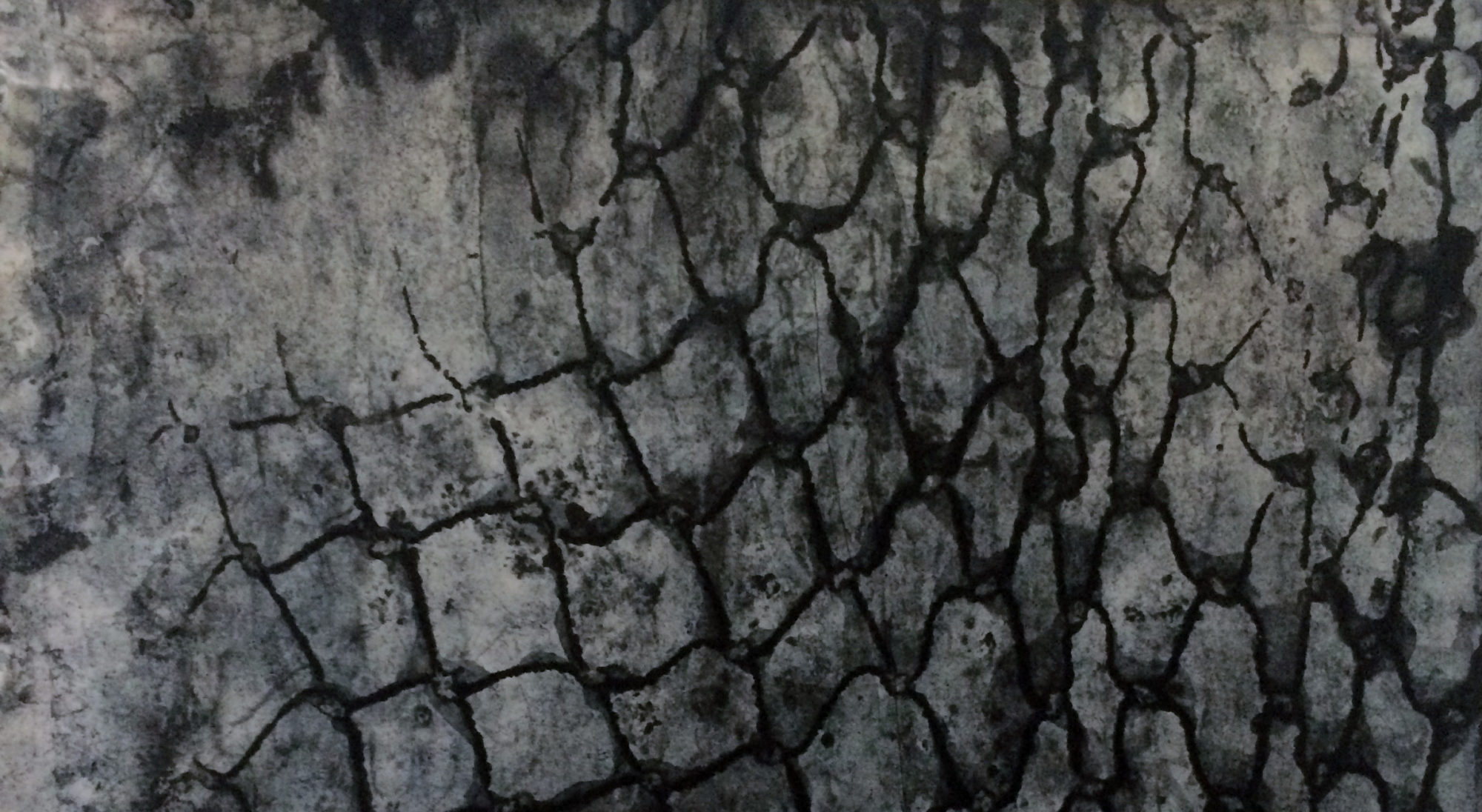
Reports on Chromidrosis detail how the blue/black secretion could be rubbed off, only to return in a short period of time. Secretion presents the premise of sloughed skin, not unlike the process of ecdysis in snakes and other reptiles. These tissue fragments are reminiscent of such casts but also evidence of growth and change – as if the occupant has altered their appearance and shed their skin.

Please contact me to request links to videos at nmcguinne@gmail.com

MIDDEN

Definition of midden

1: DUNGHILL

2a: a refuse heap : KITCHEN MIDDEN, Shell Midden (archaeological)

2b: a small pile (as of seeds, bones, or leaves) gathered by a rodent (such as a pack rat)

Middens are indicative of accumulation, consumption and disposal. They grow unnoticed and slowly become part of the landscape, piling and collapsing, altering and camouflaging until they are no longer discernible unless excavated. Although considered by their makers as piles of rubbish, so much non-documentary information can be extracted from these middens, but equally much is also open to interpretation and misinterpretation, constantly shifting between meaning and suggestion. 

MIDDEN collective are Sarah Edmondson, Mary Martin and Niamh McGuinne. Collaborations so far have focussed on the interpretation of evidence; of decidedly unscientific work made in response to lunar and lunisolar calendars; a critique of geo/human-centric time, measurements, and purported experiences;  a pseudoscientific exploration into humans’ interactions with the moon and an appraisal of lunar myths and missions, combining fact with fiction to create new narratives.

And we don’t have to look too far…everywhere around us are potential-middens, middens-in-disguise, partial-middens, middens-in-hiding, proto-middens, middens-in-waiting, pseudo-middens, pop-up-middens, and we along with the pack rats are the authors of their creation.

The Trash Heap has Spoken by Neva Elliot

https://www.rte.ie/culture/2022/1018/1329158-in-the-picture-the-midden-collective-at-the-luan-gallery/

SIMON

2022

‘Returning Home’ opening 28th October – 5th November 2022 @chqdublin.

‘Returning Home’ is a charity exhibition of fine art prints from 48 members of @graphicstudiodublin and is a collaboration with @simoncommunity, kindly supported by HLB Ireland. 

2021

‘The Art of Home’ opens Monday 4th- Saturday 9th October 2021, 10am- 6:30pm at @CHQ Dublin, Custom House Quay, Dublin 1. 

‘The Art of Home’ is an exhibition of fine art prints from 41 members of Graphic Studio Dublin with Simon Communities of Ireland. Proceeds will be split 50/50 with the artists and Simon Communities helping to promote the solutions that will bring an end to homelessness in Ireland.