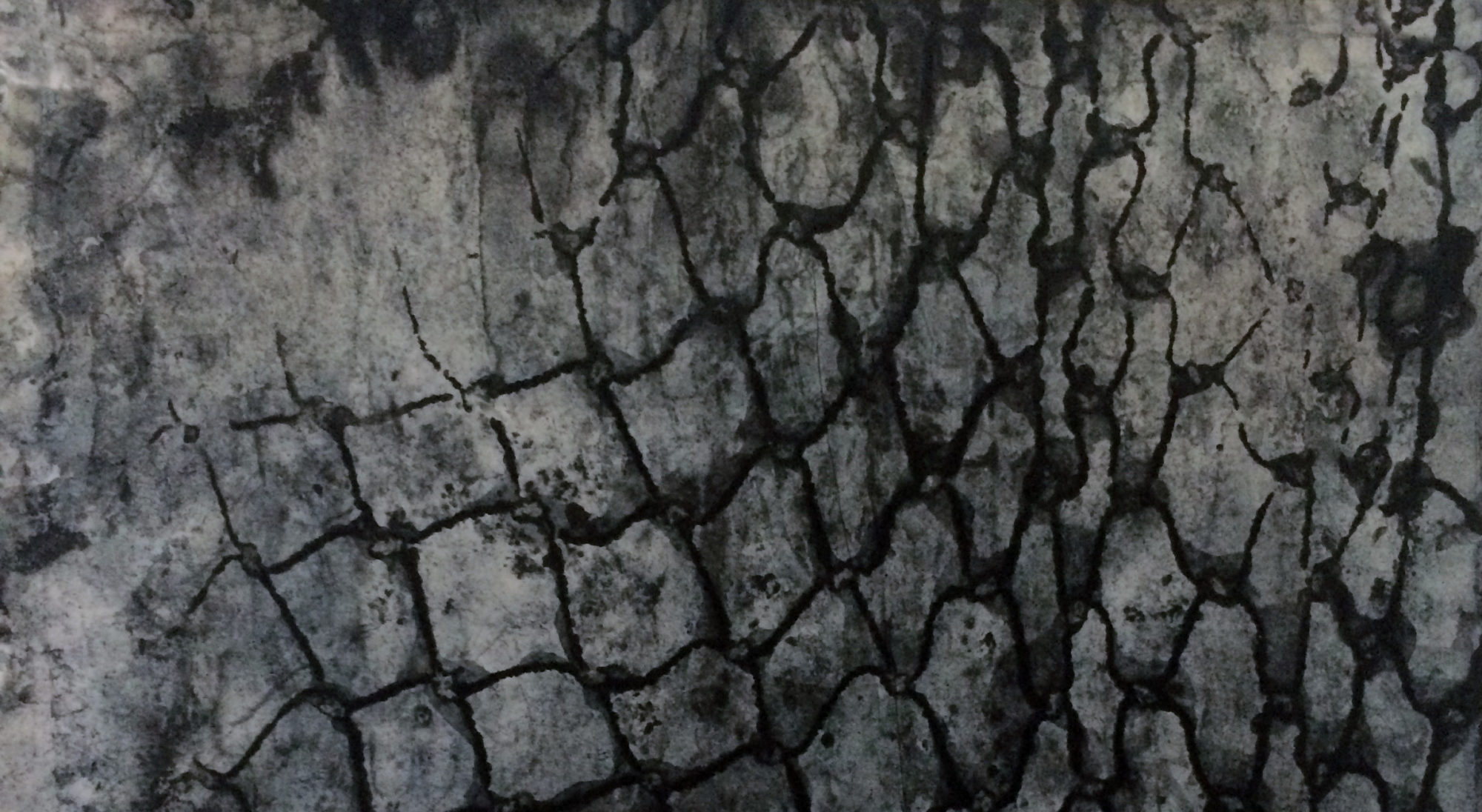
TOSS

Recently, we uncovered a virtual midden, a repository of debris tied to the insatiable greed of resource extraction. From this chaotic pile of scandal and exploitation, we propose an excavation. 

These artefacts are alluring, their superficial appeal catching the eye as they glisten within the sediment of the past. They speak volumes about humanity’s behaviour—our insatiable desire to exploit, extract, consume, and discard. Through this exhibition, we will reflect on these patterns of destruction and the undeniable truths they leave behind. 

MIDDEN collective are Sarah Edmondson, Mary Martin and Niamh McGuinne – who together focus on the interpretation of evidence, creating decidedly unscientific work combining fact with fiction to create new narratives.

The objects that caught my eye included: a pile of crumbling mica, some silver scales and a heap of seaweed, glistening in the low tide. The theme of this collection of works addresses ideas of waste, over-exploitation and greed. Individually they appear disparate but on closer inspection there are links and connections binding them together.

Mica refers to a group of 37 naturally occurring silicate minerals which are mainly used in electronics, construction, cosmetics and car manufacturing due to their heat resistence, insulating and reflective properties. It is used in the plastics industry as it is so lightweight and has sound absorption properties. It is a familiar additive in pearlescent paints, coatings and cosmetics. It improves corrosion resistance and durability of industrial components and equipment. Its ability to withstand electric currents makes it useful in electronic transformers, semiconductors and circuit boards in addition to household items such as heaters and his dryers. It is added to lubricants and in the car industry it can be found in brake linings, rubber components, and is increasingly useful in electrical battery packs and electric vehicles. Most mica is mined and extracted from India and Madagascar, followed by Brazil, USA, Malaysia and its mining is spreading throughout the African continent due to the increase in demand. It is commonly associated with poor communities lacking education and healthcare, unregulated conditions and child labour and illegal mining with workers only earning a tiny percentage of its worth – well below a living wage.

In Reliquary, I am looking at the local mica housing crisis, where in an effort to save money, mica was added to the concrete aggregate in the form of an extender. It was unregulated and under-researched – its propensity to absorb water caused damage in freeze thaw cycles leading to widespread destruction. The defective concrete has been described as crumbling and Weetabix-like in texture.

A reliquary is a vessel created to protect something sacred – and as is custom, it is an object of great value both materially and conceptually. This reliquary holds the memory of this failing at the hands of an insatiable greed for resource extraction, a decision to cut corners in the process (to increase the profit margin) – and an example of unethical extraction compounded by questionable source locations and labour practices. This memory has a value. 

These artefacts are alluring, their superficial appeal catching the eye as they glisten within the sediment of the past. They speak volumes about humanity’s behaviour—our insatiable desire to exploit, extract, consume, and discard. 

In Nite Klub Parasite, all that was left of a vibrant club scene are a few silver scales, vestiges of a disco ball perhaps or something more sinister. Ireland’s nightclub industry continues to face a major decline, with only 83 clubs still operating nationwide, down 83% since 2000. Many of these clubs are now boutique hotels and suppliers of fine goods. Campaign group Give Us The Night highlight exorbitant costs, strict licensing laws, and early closing times as contributing factors. Dublin’s 2:30 AM closing time is the earliest in the EU with 6:30 AM the average in other capital cities and the Special Exemption Order (SEO) required to operate costs €21,320, plus legal fees, per year.

Smaller clubs and regional venues are less able to absorb these legal fees, staffing costs, insurance, and rising energy bills. There has been a suggestion to freeze VAT on dance/music events, to relaunch the 2023 Noise Mitigation Grant Scheme and to increase early Sunday morning bus availability and bike parking. 

In the meantime, these restrictions are acting like a parasite on the sector, slowly draining the life from Ireland’s nightlife economy. Piecing the scales together with artistic licence, I have reconstructed a larger than life imaginary parasite that in the form of rising rents, insurance, and overheads, slowly sucked the life out of the sector.

Through this exhibition, we will reflect on these patterns of destruction and the undeniable truths they leave behind. Arramara Teoranta, owned by Canadian multinational Acadian Seaplants, has renewed applications for large-scale seaweed harvesting rights along parts of the Galway coast. Now compared to oil or gold, seaweed is considered valuable for pharmaceuticals, cosmetics, animal feed and other industries. Particularly important are species like kelp and ascophyllum nodosum (feamainn bhuí), which are used in alginate extraction and agricultural products. The controversy is about ownership, environmental impact, and whether Gaeltacht communities should keep control over marine resources that have supported them for generations. Bounty reminds us of the value that should be placed on the natural resource, rather than the financial sell-out for short term gain. The fact that this proposal continues to surface shows a belief that a community can be worn down by wealthy global entities supported by the indifference and greed from particularly non-local government agencies that encourages their campaign.

A collaborative piece There’s Millions in it, references often misquoted (There’s Gold in them that hills) Mark Twain’s 1892 ‘The American Claimant’. The hills in this case are Tyrone’s Sperrin Mountains, where Canadian company Dalradian Gold wants to mine in a designated Area of Outstanding Natural Beauty. The mining firm has been working on the Curraghinalt site near Greencastle since 2009 and has applied to develop an underground gold mine. The public inquiry is ongoing, this being the third time a hearing has been convened.

The Ties that Bind

‘The Ties that Bind’ is S/TAC’s fourth show to date and focuses on emotional, somatic and psychological aspects of shelter, presenting a short film The Ties that Bind, the collaborative installation The Clothesline, and a selection of works on paper to illustrate the genesis of the project which was initiated through a collaborative workshop held in the Chocolate Factory, Dublin 1.

‘The Ties that Bind’ is a short film created for Waterford’s Imagine festival for GOMA and was filmed and edited by Fillipe Lezo with S/TAC. The clothesline can signify a variety of feminist and feminised ideas and is a deep-reaching metaphor for the ties that bind families, communities and women together. Strung together it becomes a symbol of the chaos and intersection of lives and cultures within an imposed vertical grid. The lines can be seen to embody twin notions of shelter/ exposure; concealment/revelation; reality/fiction; conscious/unconscious.

The Clothesline installation comprises a number of painted and printed textile pieces, each depicting a particular source of imagery, approach and palette associated with the members of the collective as individuals. While each carries the distinctive marks and gestures of each of the five artists of S/TAC, the whole work is unified through over-printing using colour and stencilled motifs which reference a connecting theme of exposure and masking of internal body organs. The collaborative installation acts as a symbol of shelter, connectedness and intersection which overtly plays with notions of ‘life on view’, private versus public, acts of display and exposure, domesticity and ‘women’s work’…

The works on paper were developed and facilitated by an Arts Council funded workshop, which focussed on the embodiment of experience. Using mono-print and stencilling the first stage of the process which led to The Clothesline and has culminated in the film ‘The Ties that Bind’, saw an extended collaborative group including the collective, curators, scientists and individual artists create collage and layered prints on paper. These small prints were originally formed into giant capes and worn before being finally dismantled and sewn into books. In 2023, when the group was invited to exhibit in the National Gallery of Ireland, this work was further developed into The Clothesline using the concepts and processes initiated in the collaborative workshops.

Accompanying these collaborative works are a selection of pieces by each of the artists which provide some hints and suggestion to the particular significance/resonance to each and how that feeds into and is nourished by the participation and collaboration of a collective.

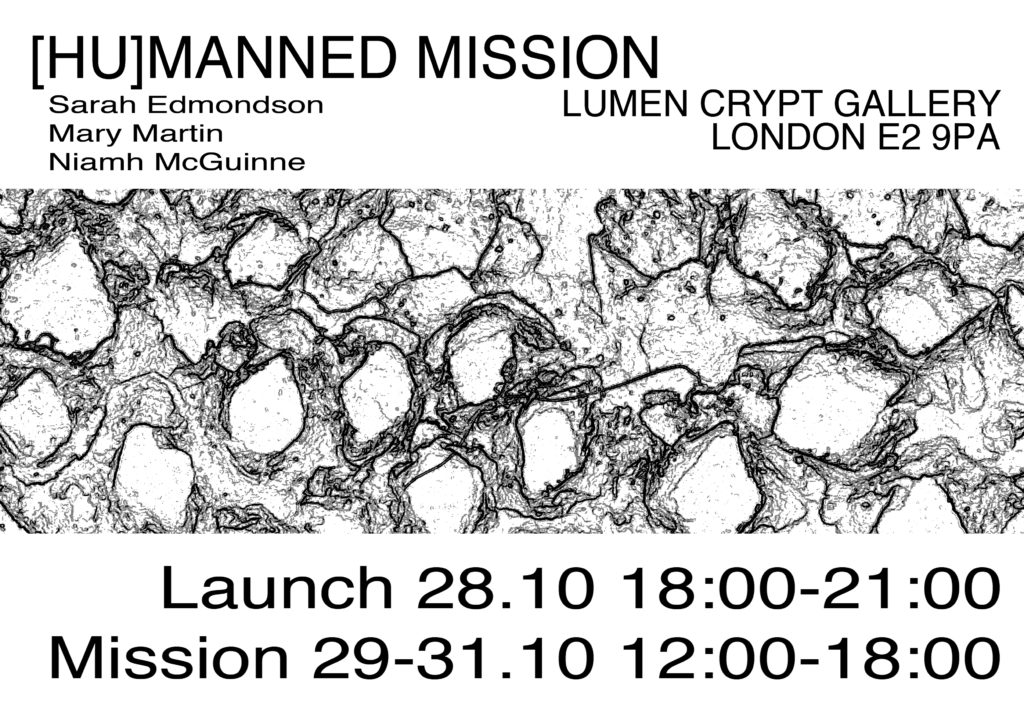
[Hu]Manned Mission

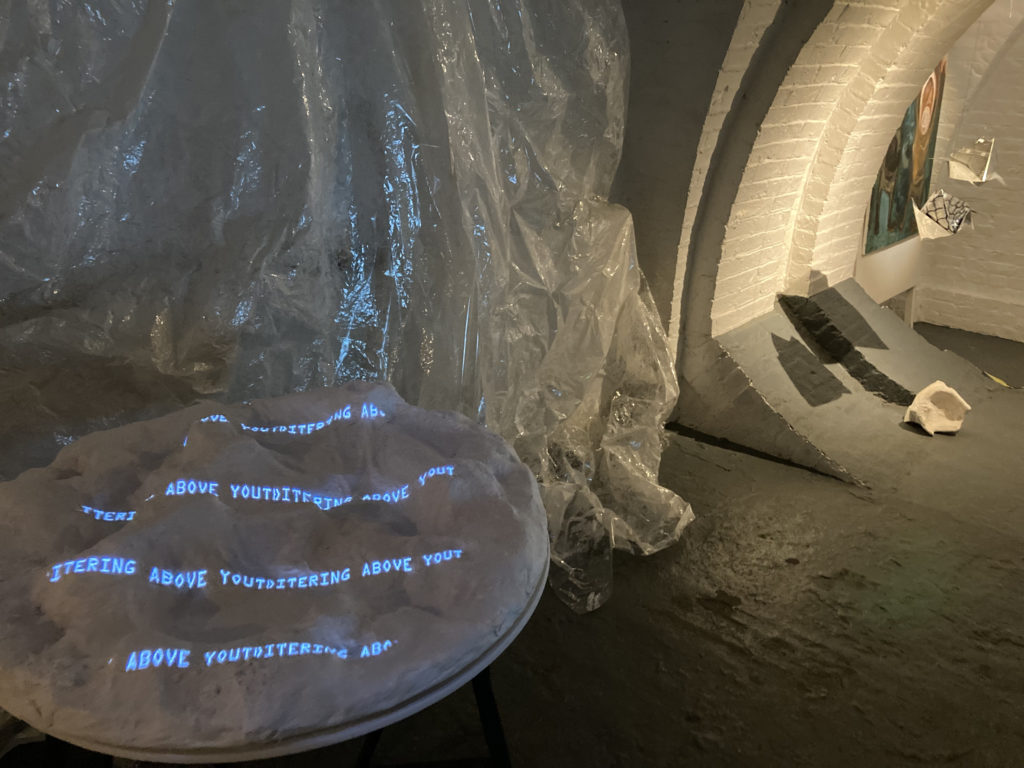
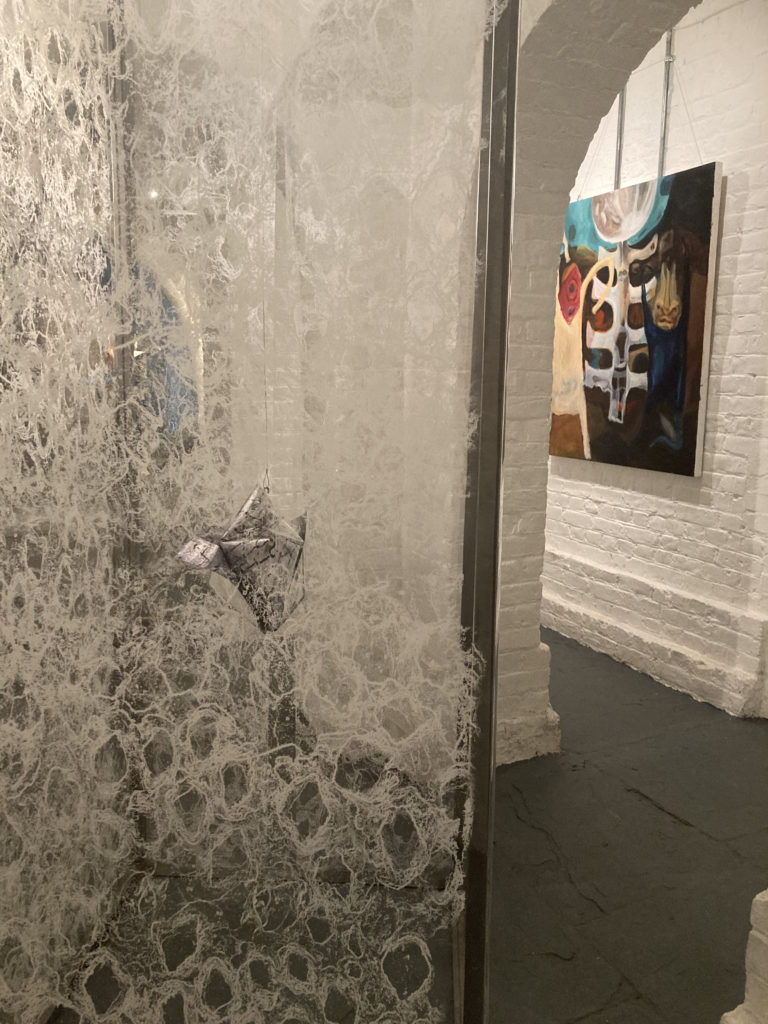
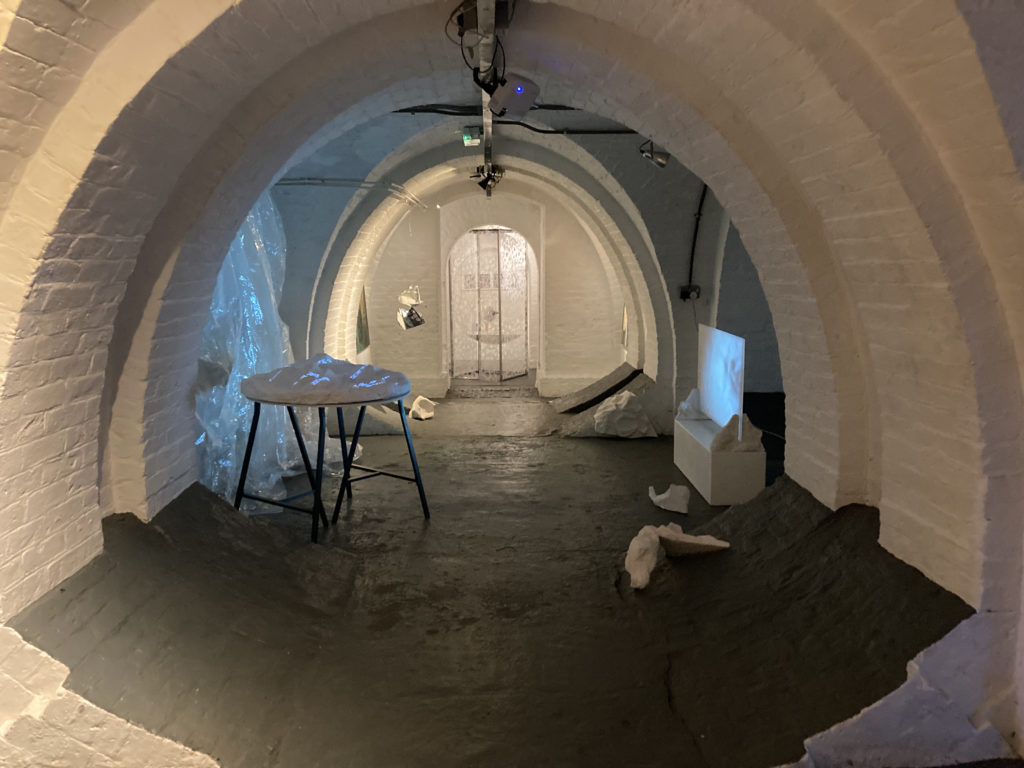
[Hu]Manned Mission is a pseudoscientific exploration into humans’ interactions with the moon. An appraisal of lunar myths and missions, combining fact with fiction to create new narratives. It offers an invitation to reconnect and communicate with your moon, to consider the importance of language in your quest, because … it matters what stories we tell to tell other stories with; it matters what knots knot knots, what thoughts think thoughts, what descriptions describe descriptions, what ties tie ties. It matters what stories make worlds, what worlds make stories (Haraway, 2016).

The moon is a distant object, gazed upon by more humans than any other solid object in the universe (Morton, 2019), yet its surface has only been walked on by 12 white American men. The only people to have experienced it first-hand. However, does that make the rest of our knowledge less valid?

In a Dream in a Happy House

‘In a Dream in a Happy House’ is S/TAC’s third show to date and also their first show which focuses solely on the collective itself rather than through the lens of a historical collection or role as artistic shelter. Once again S/TAC zones in on the emotional and psychological theme of shelter but this time sets it in contrast with a more ominous expression; one of confinement, duty, expectation and the delusions of domestic bliss. 

Taking inspiration in the title from the 1980s Siouxie and the Banshees track ‘Happy House’, S/TAC questions the many versions of shelter which can be interpreted as sanctuary or cell. The sense of ambiguity is important, on one hand there are suggestions of safety, protection and detachment, whilst there are also issues surrounding claustrophobia, containment and captivity. As ever, the expression of this concept is closely linked to the body, through identity, our many selves, the collective and the collective experience. 

Highlighting the role of an artist collective as a form of support, encouraging experimentation and the many hybrids that can develop alongside the individual practices which include painting, photography, print, installation and film, in this exhibition the ‘happy house’ is revealed through (in)dependence, the role of the matriarch, the responsibility of family, the reemergence of the individual and the multiplicity of the self.

Shelter at the National Gallery of Ireland

Shelter highlights new artworks created by the five members of the Shell/Ter Artist Collective (S/TAC). Diana Copperwhite, Allyson Keehan, Niamh McGuinne, Sharon Murphy and Geraldine O’Neill work in a variety of formats: painting, sculpture, expanded print and photography. Their work is complemented by a selection of objects from the Gallery’s collection, and pieces by international artists whose work and practice resonates with the Collective. Using the Print Gallery imaginatively to show works that explore the idea of shelter, traditional methods of display are expanded and disrupted to create a vibrant, thought-provoking exhibition.

The ladder is always there

Curated by the S/TAC Collective

Shell/Ter Artist Collective (S/TAC): Diana Copperwhite, Allyson Keehan, Niamh McGuinne, Sharon Murphy, Geraldine O’Neill in association with ten emerging artists; Maya Brezing, Matthew Coll, Karen Ebbs, Spencer Glover, Ami Jackson, Mary Martin, Fiach McGuinne, Sorcha McNamara, Eileen Leonard Sealy and Catherine Ward.The exhibition’s title, the ladder is always there, is from the poem ‘Diving into the Wreck’ by the feminist American poet Adrienne Rich who conjures the image of a woman preparing for a deep-sea scuba dive to explore a shipwreck. The ladder can be understood as both an object and as a metaphor for support and movement, always there. 

The main focus of this exhibition is to highlight the role of an artist collective as a form of support for early career artists and to encourage collective action through art. It presents new works by recent graduates alongside more established artists in drawing, painting and its expanded forms – photography, print, film, installation – which take inspiration from or which reference painting, both materially and conceptually. 

“The word Shelter means to me what you care for and how you do that both physically and psychologically. The importance to me of the Shell/ter Artist Collective is that it is a dynamic space, one in which to experiment and find connections that you might not find on your own. My hope is that it continues to change and adapt … while remaining a form of shelter in itself.”

Shell/ter Artist, Niamh McGuinne

The Shell/Ter Artist Collective explores the concept of shelter from emotional, psychological, and philosophical perspectives and seeks to provide a dynamic space for artists whose work resonates with or delves into the theme of shelter. This is closely aligned with Draíocht’s commitment to support young, early career artists from Dublin 15, Fingal County and beyond through commissions, exhibitions, studio residencies, bespoke mentoring, and international exchange. 

Artist Collectives are not new. From ancient sculpture workshops, medieval painter guilds, Renaissance master studios and schools of the French and other European art academies to the modernist collectives of the Dadaists, the Situationists, the Bauhaus and the Fluxus Group, shared identity, common purpose and egalitarian values underpin much of the desire to work as a group.

The Shell/Ter Artist Collective (S/TAC) evolved organically during the pandemic 2020 and was driven by a desire of the artists to talk about the effects, both personal and professional, of a shifting and unpredictable world. In this dynamic space the artists found ways to explore, enrich and diversify their independent practice while supporting one another.

Finds

Finds

In Finds 2024, MIDDEN collective respond to and [re]interpret the finds from the 2014 dig at Rathfarnham Castle, providing a critique of the boujee lifestyle of Lord Adam Loftus’s decadent descendants and the Castle’s partygoers in the 17th century and their appetite for apathy.

Found Shoe

MIDDEN

MIDDEN collective are Sarah Edmondson, Mary Martin and Niamh McGuinne. Collaborations so far have focussed on the interpretation of evidence; of decidedly unscientific work made in response to lunar and lunisolar calendars; a critique of geo/human-centric time, measurements, and purported experiences;  a pseudoscientific exploration into humans’ interactions with the moon and an appraisal of lunar myths and missions, combining fact with fiction to create new narratives.

Sarah Edmondson is an interdisciplinary artist, museum and gallery educator, lecturer at NCAD, and studio member at MART, Dublin. Her work is informed by her dual role as an artist and art educator, critically analysing her supposed position of expert power in different contexts and communities. She is interested in the evolution of knowledge and the role iconic images from the history of art and the media have on our understanding of interpersonal relationships and the natural world; using a variety of mediums to playfully challenge anthropocentric views. To date, she has successfully created staged photographs in response to archival ephemera, pseudoscientific zines, moving images and video installations. The writings of Donna Haraway, Sophia Al-Maria and Hito Steyerl inform her practice. Edmondson is also part of the collective MIDDEN alongside Mary Martin and Niamh McGuinne. Recent exhibitions included; MIDDEN, Luan Gallery, Athlone; Through Light and Shade, Alalimón Galeria, Barcelona; and Gormworm, TaKt, Berlin. In 2023 she completed a residency at IMMA with the Museum of Everyone’s Communal project and is a MOE Associate Artist.

Mary Martin is an Irish visual artist and a 2021 Fine Art Graduate of Brighton School of Art. Through paint and collage, Martin constructs an alternate reality; a heterotopia. Her playful approach to language and interpretation together with her vibrant and surreal compositions belie a serious reflection on the Anthropocene where she presents a future evolutionary state where it is unclear if humanity still exists. While Martin’s paintings appear playful and theatrical, their serious undertones address the growing disconnection between hyper capitalist society and the natural and liminal worlds. Recent shows ALLTAR, in Takt Gallery, Berlin (2023), The Ladder Is Always There, Draíocht, Blanchardstown (2023), Deorad, Herman’s Auctioneers (2023) and TOOTH, DIVA Gallery, Dublin, alongside a 3 month residency in Berlin, reflect an exciting emerging artist with her finger on the pulse of a reality crisis.

Shell/ter Artist Collective S/TAC

About the Collective

The Shell/ter Artist Collective (S/TAC) evolved organically during the pandemic 2020 and was driven by a desire of the artists to talk about the effects, both personal and professional, of a shifting and unpredictable world. In this dynamic space, the artists found ways to explore, enrich and diversify their independent practice while supporting one another. The Collective explores the concept of shelter from emotional, psychological, and philosophical perspectives and previous exhibitions include ‘Shelter’ at the National Gallery of Ireland 2023 and ‘The ladder is always there’ in Draiocht in 2023/2024. Shared identity, common purpose and egalitarian values underpin much of the desire to work as a group, and the nature of this engagement continues to shift and develop.

Diana Copperwhite (RHA) is a member of Aosdána and draws particular inspiration from early Irish modernism. Her paintings explore the relationship between colours, gestures, figuration, and representation. She gives structure to the unseen world of atoms and molecules to examine the psychological and spatial interpretation of self. Layering fragmented sources that range from personal memory to science, media and internet, Copperwhite’s canvases become worlds in which the real is unreal and this unreality is in a constant state of reforming. 

www.dianacopperwhite.net

Allyson Keehan is an Irish visual artist based between Ireland and Scotland. She was awarded PhD in Fine Art from Glasgow School of Art in 2021 titled ‘Painting and Materiality: Three Creative Strategies for Transformation’. Her research is in the expanded field of painting and the use of drapery in art. Looking closely at veiling and artifice, her practice incorporates drapery and framing to create complex structural experiences of real and imaginary spaces. Drapery has a wealth of history relating to painting and these propositions amplify the experience of viewing and understanding. 

www.allysonkeehan.ie

Niamh McGuinne‘s practice combines print, sculpture, textile, film and installation. The immersive nature of her background in paper conservation working with historical collections informs this art practice. Conceptually she is interested in the body as the protector, a shell in which to develop…and how time and growth are marked and interpreted. Her work has an element of the performative, either as a space or as costume in which to interact, which presents an invitation to participate – physically or imaginatively. 

www.niamhmcguinne.com

Sharon Murphy is a visual artist based between Dublin and Paris whose practice is lens-based incorporating photography, video, installation and drawing. Her work investigates the boundaries between the seen / unseen, fictive/real, conscious / (sub)liminal.  Drawing on a background in theatre and informed by concepts in magic realism and psychoanalysis, recurring motifs in her work include: theatre curtains; carousels; circus tents, performative sites; embodied staged spaces. Her works address uncertainty, the uncanny, the ‘there / not there’, linked to an investigation, quintessential to both photography and performance of what it is the viewer is shown or is seeing.

www.sharonmurphy.ie

Geraldine O’Neill (RHA) is a member of Aosdána and has particular respect for and understanding of the techniques and visual language used in the history of art. She has long responded to the increasing confrontation with human engagement and relationship with the ecosystem, in particular the Anthropocene whose traces are now embedded within the geological layers of the Earth’s structure. Playing with incongruities of time and space, she juxtaposes traditional references with scientific reasoning and contemporary perspective in large-scale and small-scale compositions. Her works address protection and shelter from a domestic and environmental viewpoint to emphasise the fragility of life.

www.geraldineoneill.ie

MIDDEN

Definition of midden

1: DUNGHILL

2a: a refuse heap : KITCHEN MIDDEN, Shell Midden (archaeological)

2b: a small pile (as of seeds, bones, or leaves) gathered by a rodent (such as a pack rat)

Middens are indicative of accumulation, consumption and disposal. They grow unnoticed and slowly become part of the landscape, piling and collapsing, altering and camouflaging until they are no longer discernible unless excavated. Although considered by their makers as piles of rubbish, so much non-documentary information can be extracted from these middens, but equally much is also open to interpretation and misinterpretation, constantly shifting between meaning and suggestion. 

MIDDEN collective are Sarah Edmondson, Mary Martin and Niamh McGuinne. Collaborations so far have focussed on the interpretation of evidence; of decidedly unscientific work made in response to lunar and lunisolar calendars; a critique of geo/human-centric time, measurements, and purported experiences;  a pseudoscientific exploration into humans’ interactions with the moon and an appraisal of lunar myths and missions, combining fact with fiction to create new narratives.

And we don’t have to look too far…everywhere around us are potential-middens, middens-in-disguise, partial-middens, middens-in-hiding, proto-middens, middens-in-waiting, pseudo-middens, pop-up-middens, and we along with the pack rats are the authors of their creation.

The Trash Heap has Spoken by Neva Elliot

https://www.rte.ie/culture/2022/1018/1329158-in-the-picture-the-midden-collective-at-the-luan-gallery/